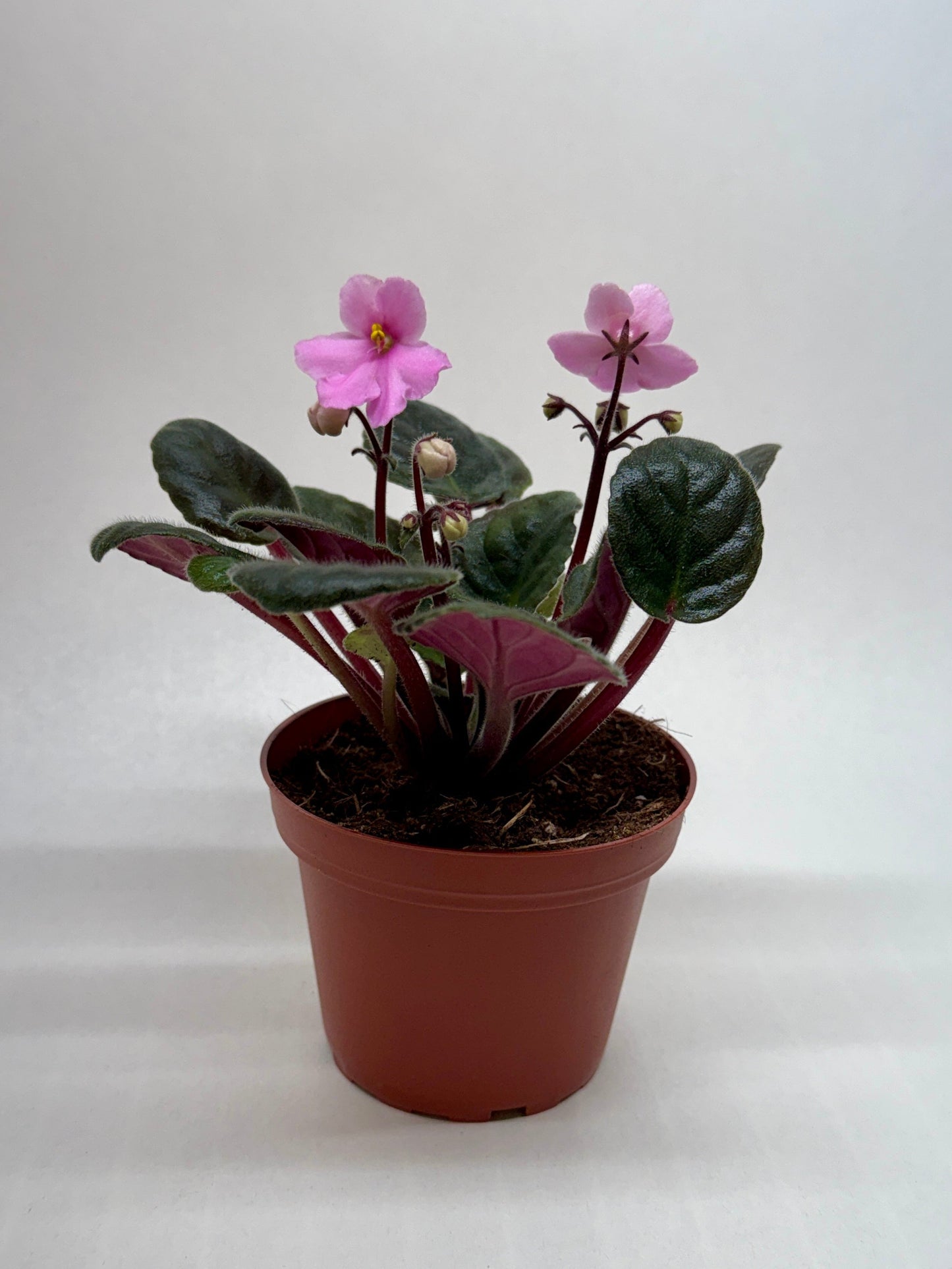
African Violet 'Pink'
African Violet 'Pink'
Saintpaulia
Couldn't load pickup availability
A charming flowering plant that brings color to even the smallest spaces. African Violets are loved for their soft, velvety leaves and delicate blooms that can appear almost year round when given the right care.
This compact beauty grows in a neat rosette shape, making it perfect for desks, shelves, and windowsills where space is limited but beauty is welcome. With proper watering and gentle light, it rewards growers with clusters of purple, pink, or white flowers that brighten any room.
Native to East Africa, African Violets thrive indoors and are especially popular among beginners because of their manageable size and reliable blooms. Their cheerful flowers make them a favorite for gifting or adding a touch of color to everyday living spaces.
Best spot: Place 1–3 feet from an east or north facing window for gentle morning light.
Alternative: Bright room with indirect light such as a desk near a window.
STEP 2: Light Duration
Needs 10–12 hours of bright indirect light daily for consistent blooming.
Adapts well to LED grow lights for 12–14 hours if natural light is limited.
STEP 3: Rotate Weekly
Rotate the pot a quarter turn each week so the rosette grows evenly and does not lean toward the light.
How to check: Touch the top 1 inch of soil. Water when it feels slightly dry but not fully dry.
Pro tip: African Violets prefer consistently lightly moist soil, not soggy or dry.
STEP 2: Water Carefully
Water from the bottom or at the soil level to avoid wetting the leaves.
Let the plant absorb water for 15–20 minutes, then remove excess water.
STEP 3: Wait and Repeat
Frequency: Usually every 5–7 days in growing season, 7–10 days in winter depending on temperature and humidity.
Use room temperature, filtered water when possible to avoid leaf spotting.
Pale or bleached patches on leaves
This is a sign of too much direct sunlight. Move the plant to bright indirect light or filter sunlight with a curtain.
⸻
Long leaf stems, fewer flowers
This is a sign of too little light. Move the plant closer to a bright window with indirect light.
⸻
Soft yellow lower leaves
This is usually a sign of overwatering or poor drainage. Allow the top inch of soil to dry slightly before watering again.
⸻
Brown spots on leaves
Often caused by cold water touching the leaves. Always use room temperature water and water the soil, not the foliage.